Incident route map
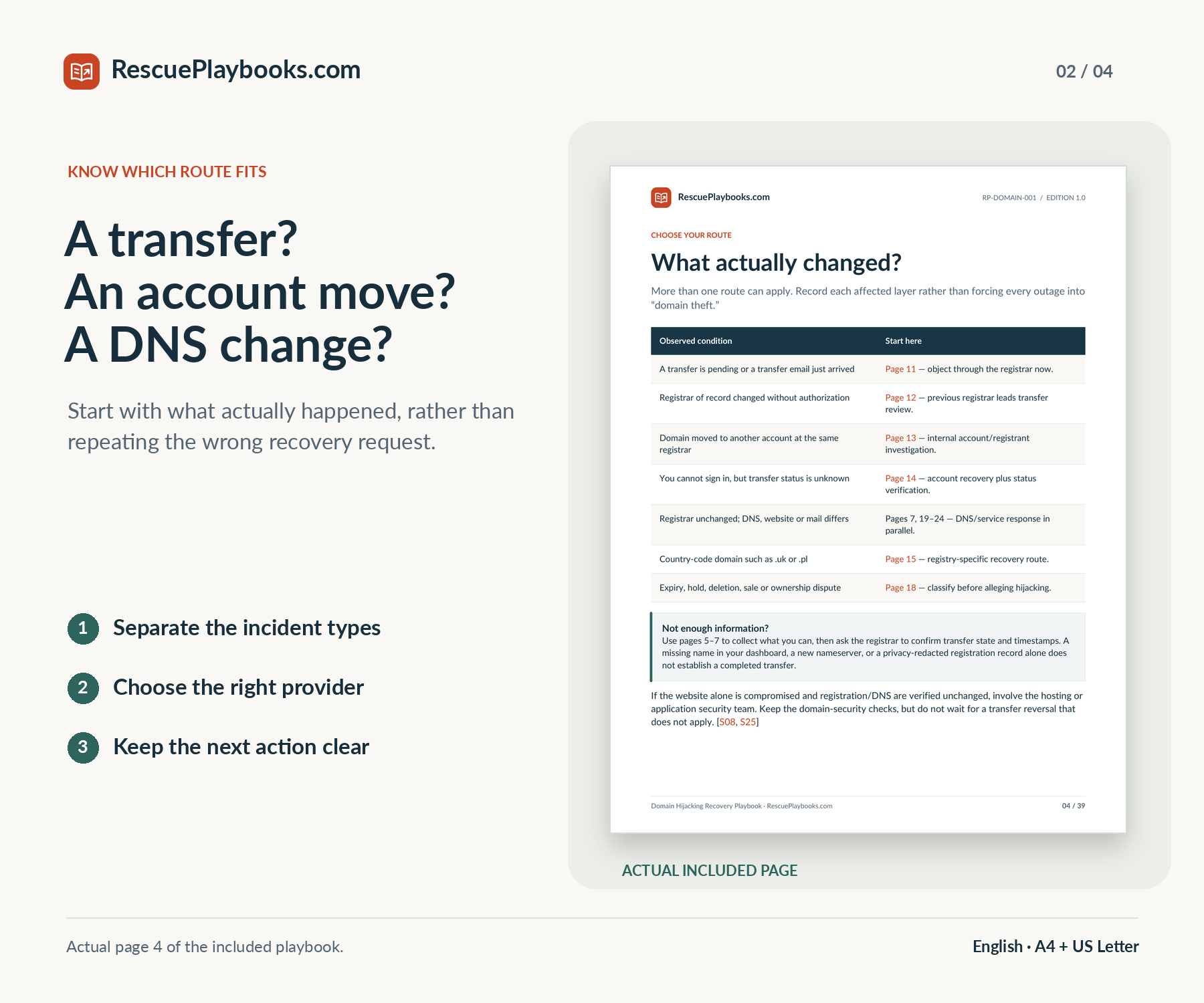
Separate pending transfers, completed moves, internal account changes, access loss, DNS incidents and alternative causes.
Protect control. Build the evidence. Follow the right escalation.
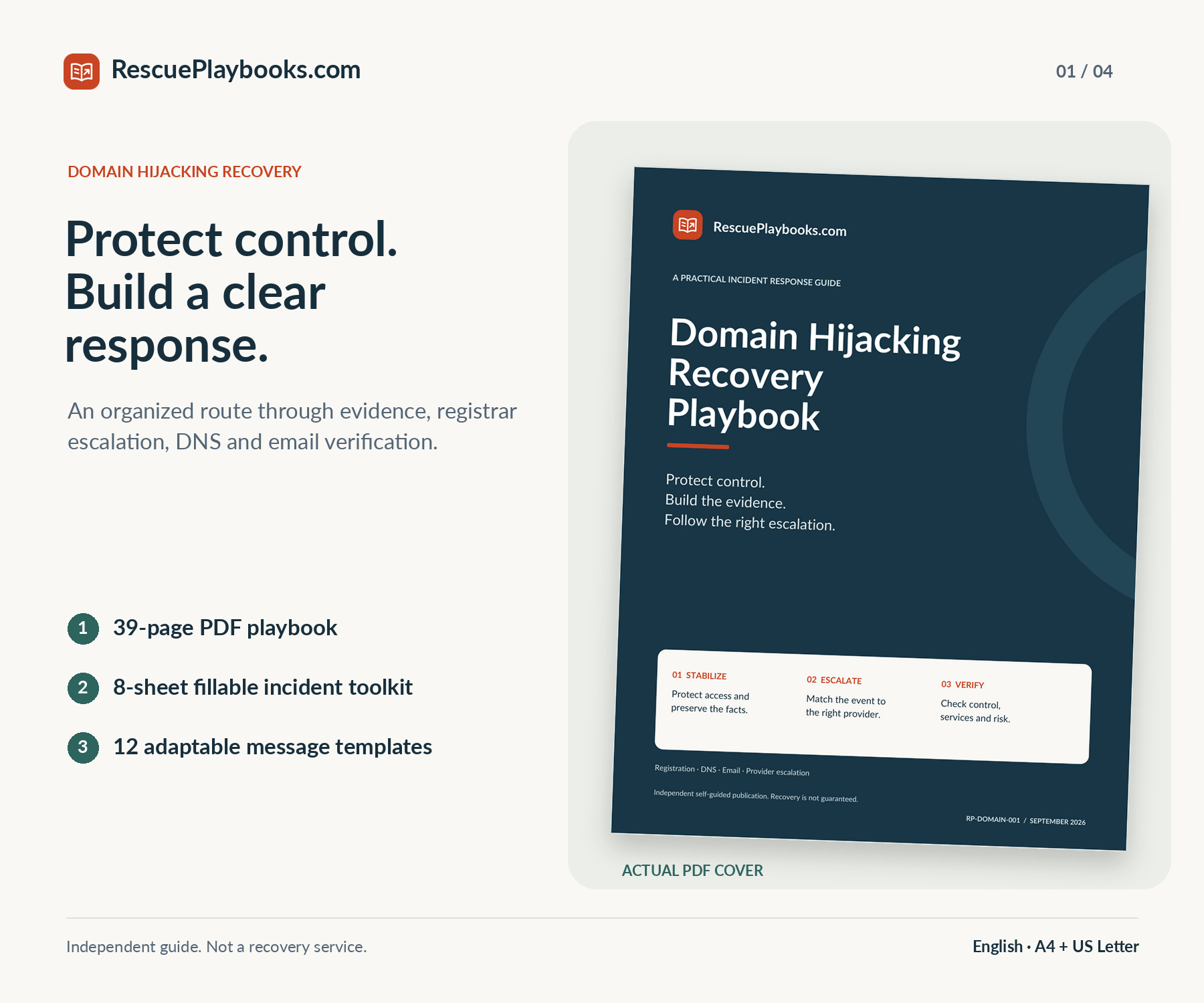
Turn a suspected domain takeover into a clear response plan. Identify the type of incident, organize proof of authority, make focused registrar requests, coordinate DNS and email recovery, and verify what is actually back under control.
Not a recovery service. We do not access accounts, contact providers, file cases, or carry out recovery work for you.
Recovery is not guaranteed. Outcomes depend on authority, evidence, domain rules, provider decisions and the circumstances of the incident.
Independent guide. Not affiliated with or endorsed by ICANN, IANA, any registrar, or any other provider named in the guide. You are paying for an independently organized guide, PDF tools and adaptable messages—not privileged provider access or recovery work performed on your behalf.
From the first report to the final verification, keep decisions, evidence and next steps organized.
Separate pending transfers, completed moves, internal account changes, access loss, DNS incidents and alternative causes.
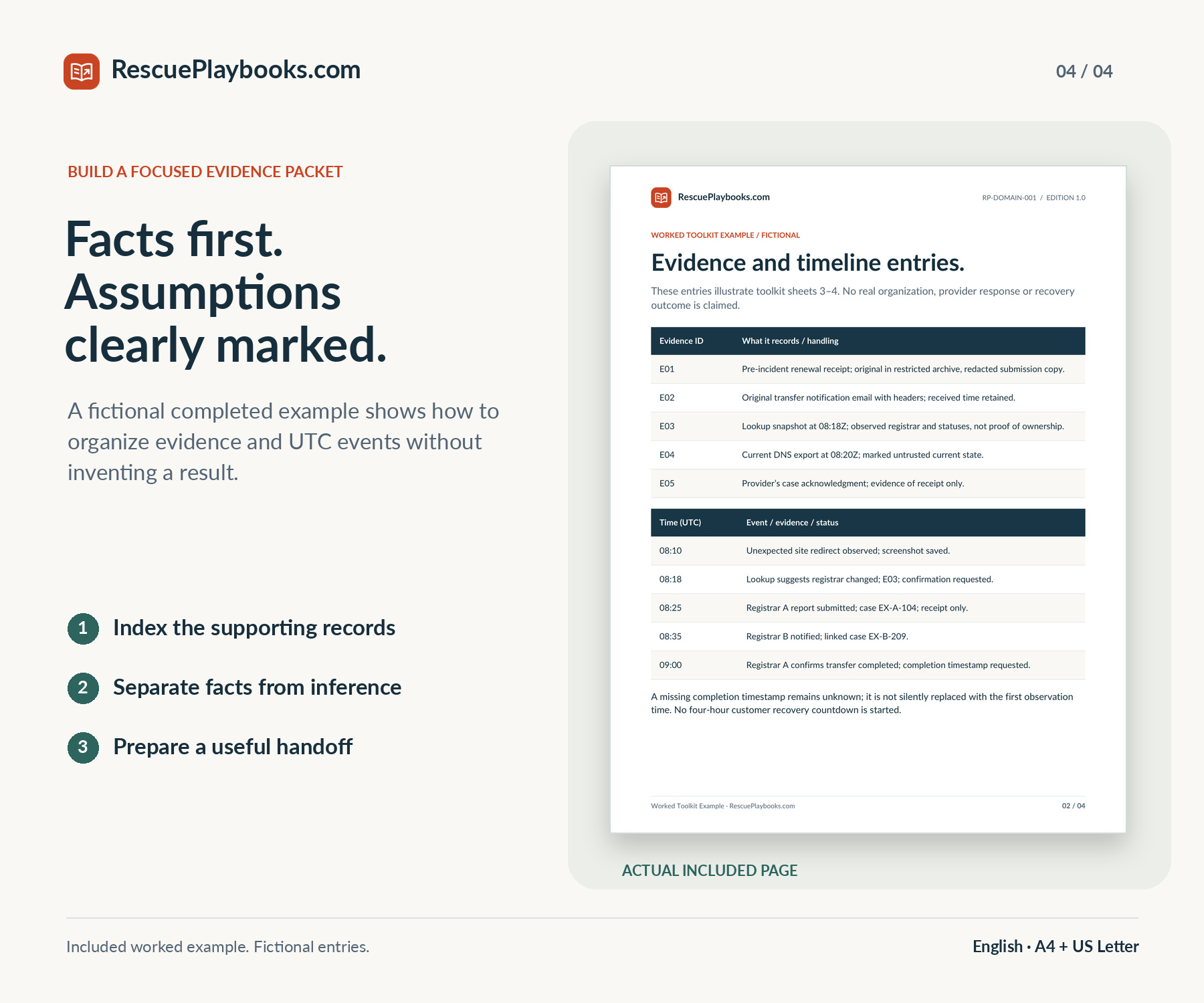
Organize authority, historical records, UTC events and provider case references without exposing recovery secrets.
Use twelve adaptable templates and clear distinctions between registrar review, TEAC, TDRP and ICANN complaints.
Prepare an approved restoration baseline and coordinate DNSSEC, mail, identity and certificate checks.
Check registration control, service operation and remaining security/exposure questions separately.
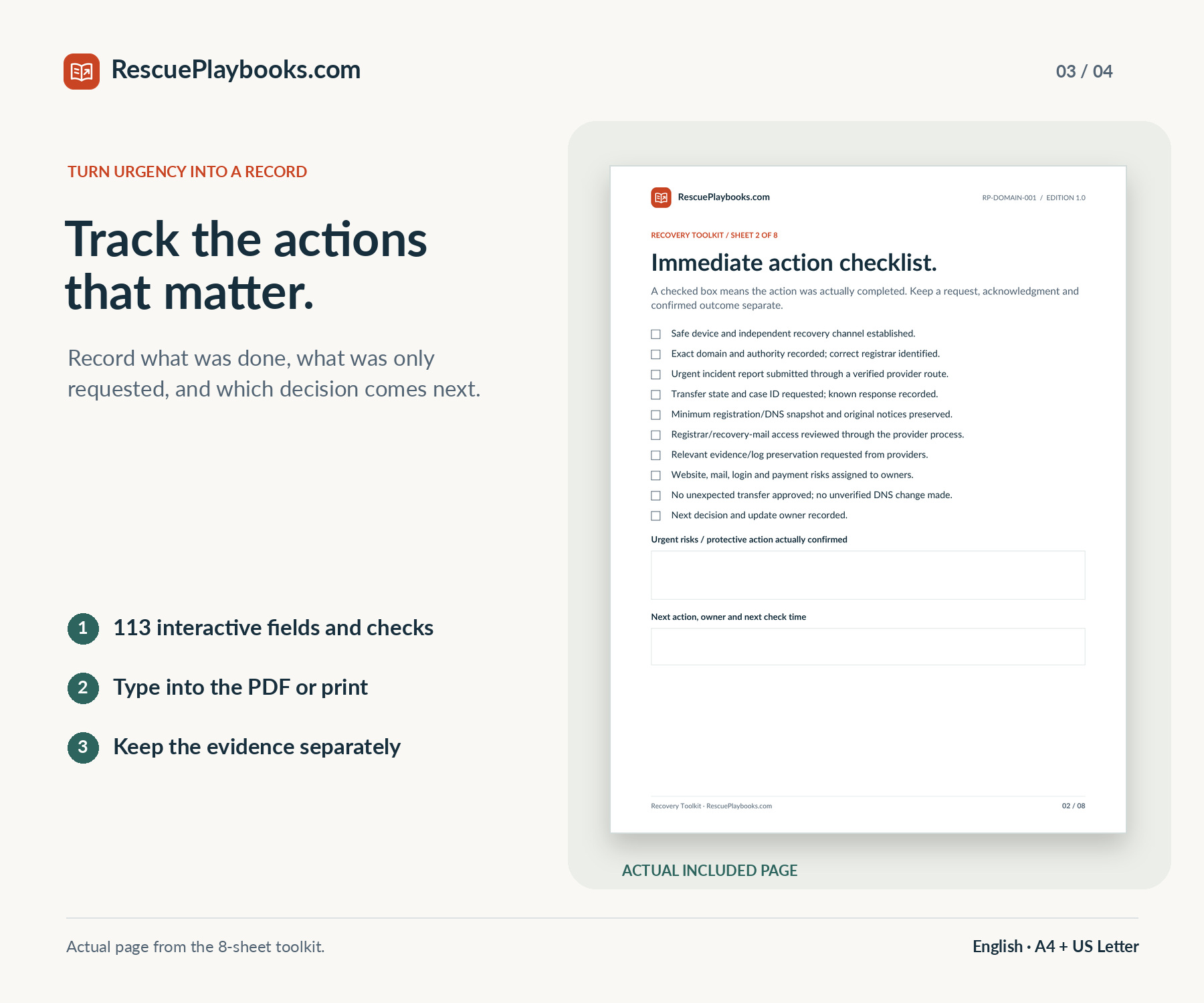
Use eight printable PDF sheets with 113 interactive fields and checkboxes.
See fictional records that preserve uncertainty rather than inventing a successful recovery.
Open 25 primary references with clear limitations and a stated review date.
Keep a structured case record while you work with the relevant providers.
With official references and separate recovery routes.
A4 and US Letter PDFs; the toolkit supports form filling.
Quick Start, eight toolkit sheets, worked example and twelve message templates.
A4 and US Letter editions contain the same content. No audio file is included.
Hands-on recovery, remote access, provider representation, legal advice, litigation or forensic investigation. Registrar or registry fees, legal fees, software licenses, paid support access, or a procedure for every provider and country-code domain. Bypassing authentication, accessing another person’s account, buying back a stolen domain, or guaranteeing a return, deadline or finding that data was not accessed.
Independent guide. Not affiliated with or endorsed by ICANN, IANA, any registrar, or any other provider named in the guide.
You need to object through the right registrar and record whether the specific request was stopped.
You need a previous-registrar investigation, proof of authority and the appropriate escalation route.
You need to distinguish an internal push, a registrant change and a lost-access problem.
You need a controlled baseline, technical handoff and separate checks for service restoration and access.
You need a shared case record, provider messages and clear updates while decisions are pending.
You want an organized, lawful self-guided response, including when to stop and seek professional help.